Does the internet work in a power outage? What Hurricane Beryl showed
Home Wi-Fi goes off with the power. The morning after Hurricane Beryl, 28.7% of cell sites in six Texas Gulf Coast counties were down and 803,501 cable and phone customers had no service. What keeps working, and how to plan for it.
November 16, 2026 · 5 min read · by the Offgrid Brainbox team
In this guide
Not for long, and not on its own. Your home internet stops the moment the power does: the modem and the Wi-Fi router run on wall power. Cell service usually lasts longer, because towers have backup power and phones have batteries. But in a big storm the networks fail too, and they can stay down for days.
This is what that looked like in a real Texas storm, in the providers' own numbers.
What happened after Hurricane Beryl
Hurricane Beryl came ashore near Matagorda, Texas, early on July 8, 2024, and passed over the west side of Houston that morning. The National Hurricane Center's report cites media reports that about 2.7 million people in southeastern Texas lost power.
When the FCC switches on its disaster reporting system, phone, cable and wireless companies report their outages to it every day, and the FCC publishes a summary. These are the figures for the counties in that summary:
| July 9, 2024 | July 14, 2024 | |
|---|---|---|
| Counties in the report | Brazoria, Chambers, Fort Bend, Galveston, Harris, Matagorda | Brazoria, Fort Bend, Harris |
| Cell sites out of service | 1,335 of 4,656 (28.7%) | 207 of 4,306 (4.8%) |
| Of those, out because of power | 1,137 | 115 |
| Cell sites working on backup power | 490 | 322 |
| Cable and phone subscribers without service (phone, TV and/or internet) | 803,501 | 290,117 |
Each figure is a snapshot taken at 10 a.m. Eastern on the day shown.
Two things stand out. Most cell sites went down for lack of power, not because they were damaged: on July 9, 1,137 of the 1,335 sites that were out had lost power, and only 8 were reported damaged. And it lasted: six days after landfall, 290,117 cable and phone subscribers in three counties were still without service.
The morning after the storm, two 911 centers, the Bay City Police Department and the Matagorda County Sheriff's Office, had their calls rerouted to other centers without location information.
The FCC notes that a cell site being down does not always mean no signal in that area: networks overlap, and in a disaster carriers bring in portable sites and let their customers roam on each other's networks. The numbers measure the network, not every single phone call.
Why your home internet stops first
Cable, fiber and DSL internet all reach your house through a box that plugs into the wall: the modem or fiber terminal, and the Wi-Fi router behind it. When the power goes, they go.
A battery or a generator for those boxes helps only part of the way. The provider's own equipment in your neighborhood also needs power and its own connection back to the network. In the Beryl reports, the 803,501 subscribers without service had lost their phone, TV and/or internet, whatever was happening inside their own homes.
Home phones work the same way now. The FCC's page on network upgrades says it plainly: upgrades to your telephone service may mean your phone will not work during a power outage unless you have a backup power source.
Why cell service lasts longer, and then does not
Many cell sites have backup power of their own. On July 9, 490 sites in the six counties were up and running on it. That is why a phone often keeps working for the first hours of an outage, after the Wi-Fi is gone.
Backup power runs out, though, and keeping it going means getting fuel and crews to each site. A site also needs its connection back to the network: on July 9, 55 sites were out because of that link (the FCC calls it transport), not power.
And the phone in your hand needs charging. The FCC's own advice is that mobile phones have built-in batteries and can often be charged from inexpensive backup power sources.
What keeps working with no internet
Everything you stored before the outage, on something you can power:
- Maps you downloaded, and paper maps. "Local maps" are on Ready.gov's basic kit list.
- Documents you saved: insurance policies, prescriptions, the kids' school and doctor contacts, a printed copy of your household plan.
- Offline apps and offline files, such as an offline encyclopedia or a first-aid guide.
- A battery-powered or hand-crank radio, and a NOAA Weather Radio with tone alert. Both are on Ready.gov's basic kit list, and radio is how you get news when nothing else connects.
What does not work: anything that looks something up as you use it. Search engines, streaming, most phone apps, cloud documents and chat assistants all need the internet at the moment you ask.
A plan that does not need the internet
- Print the numbers. Family phones, your doctor, your insurer, a contact out of state. A phone's contacts are no help when its battery is flat.
- Download before the storm. Maps for where you live and where you would go, and the documents you might need. Do it while the forecast is still days away, not once the wind starts.
- Keep power for the phone. A charger and a charged backup battery, as Ready.gov lists them.
- Own a radio. Battery or hand-crank, with spare batteries.
- Keep reference at home. How to treat a burn, how to make water safe, what a medicine is for, how to shut off the gas: you need those answers exactly when you cannot search.
That last point is what an offline library is for. It does not bring the internet back. It keeps the reference in the house, readable on any phone or laptop that can connect to it. It needs electricity like everything else on this list: the Home edition ships with a wall power supply, and we have not yet measured how long it runs on a battery, so we give no figure.
The short version
Your Wi-Fi goes off with the power. Cell service holds for a while, and then, in a big storm, it can fail too: the morning after Hurricane Beryl, nearly three in ten cell sites in the six counties the FCC tracked were down, and six days later 290,117 cable and phone customers still had no service. Plan as if you will have no internet for days: print the numbers, download the maps, keep a radio and keep the answers you might need at home.
If you want to see what an offline library holds, this guide shows how big Wikipedia is offline, and the build guide shows how to make your own.
Questions people ask
Does Wi-Fi work when the power goes out?
Not on its own. Your modem and Wi-Fi router run on wall power, so they switch off with everything else in the house. Even with a battery for them, the internet only works if your provider's equipment in the neighborhood still has power and a connection too.
Do cell phones work during a power outage?
Often, at first: cell sites have backup power and your phone has its own battery. In a long, wide outage they fail too. The morning after Hurricane Beryl, 1,335 of 4,656 cell sites in six Texas Gulf Coast counties, Harris County among them, were out of service, 1,137 of them because of power, according to providers' reports to the FCC.
How long can communications stay down after a storm?
Days. On July 14, 2024, six days after Beryl came ashore, cable and phone companies still reported 290,117 subscribers without service in Brazoria, Fort Bend and Harris counties, and 207 cell sites were still down.
What still works with no internet?
Anything already stored on a device you can power: downloaded maps, saved documents, offline apps, a printed plan, and a battery-powered or hand-crank radio for news. Ready.gov puts that radio, local maps and a phone with chargers and a backup battery on its basic emergency kit list.
Will an offline library keep me online?
No. It does not connect you to anything. It keeps reference material in your house that does not need the internet: an encyclopedia, maps and official preparedness documents. It still needs electricity.
Sources, read on November 16, 2026
- FCC, Communications Status Report for Areas Impacted by Hurricane Beryl, July 9, 2024 (docs.fcc.gov)
- FCC, Communications Status Report for Areas Impacted by Hurricane Beryl, July 14, 2024 (docs.fcc.gov)
- FCC, Hurricane Beryl: all status reports and notices (fcc.gov)
- National Hurricane Center, Tropical Cyclone Report: Hurricane Beryl, amended May 1, 2025 (nhc.noaa.gov)
- FCC, Tech Transition: Modernizing Communications Services (fcc.gov)
- Ready.gov, Build a Kit (ready.gov)
Rather not build it?
We build it, check it and sign it. You plug it in.
More guides
Outages
How Long Does Food Stay Safe in a Fridge Without Power
Learn how long food stays safe in a fridge without power, including FDA time limits for refrigerators and freezers during outages.
November 17, 2026 · 10 min read
Build guide
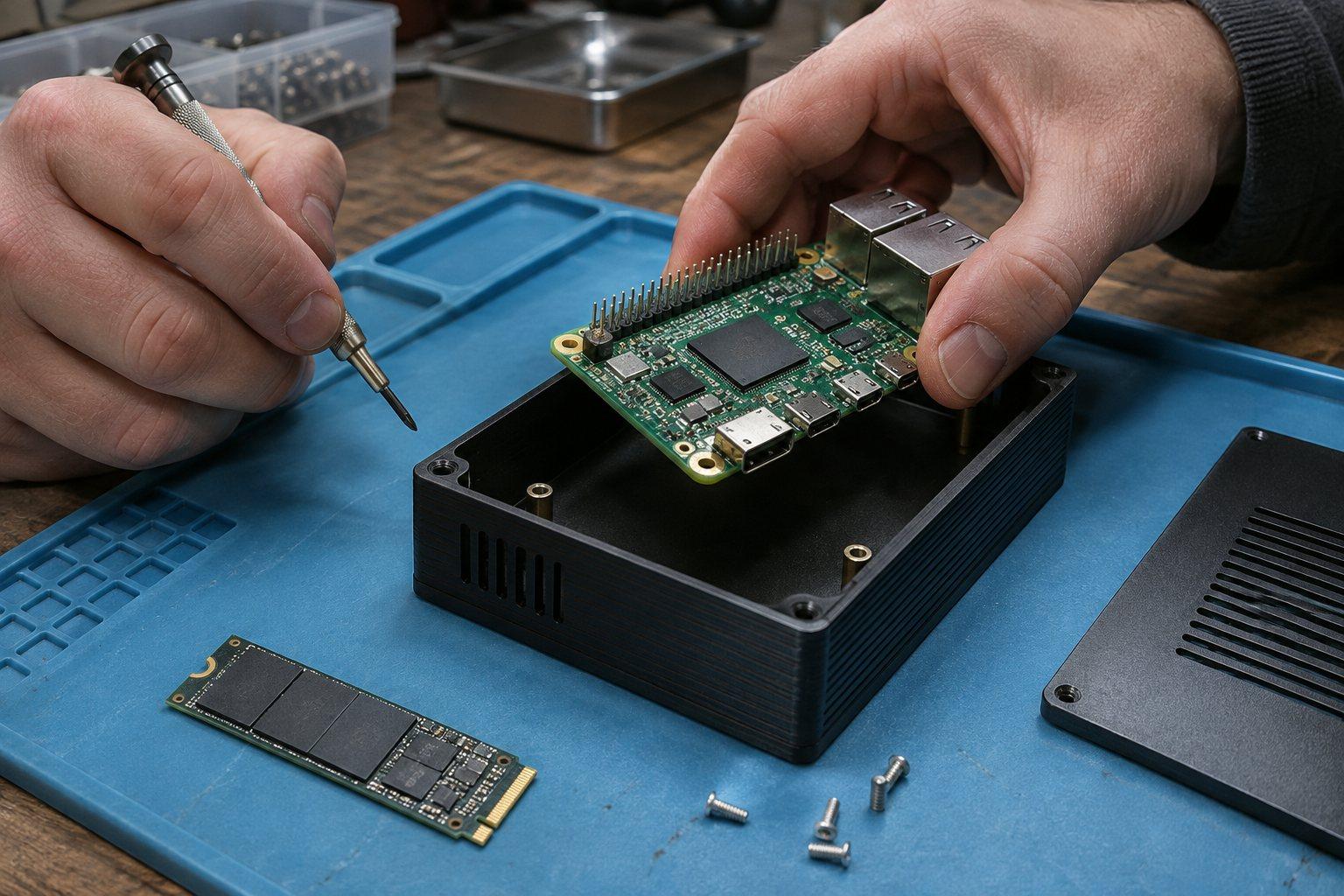
Build your own offline Wikipedia and maps hotspot on a Raspberry Pi
The whole build in plain steps: the parts, the downloads, the Wi-Fi hotspot and the offline map, with the exact commands and seven things that broke when we built ours.
November 14, 2026 · 6 min read

Offline Wikipedia
How big is Wikipedia offline? The real file sizes in 2026
English Wikipedia is 49.1 GB as text and 119 GB with images. Spanish is 12.4 GB as text. Here is every size we measured, how long the download takes and how to check the file.
November 14, 2026 · 4 min read