How Long Does Food Stay Safe in a Fridge Without Power
Learn how long food stays safe in a fridge without power, including FDA time limits for refrigerators and freezers during outages.
November 17, 2026 · 10 min read · by the Offgrid Brainbox team
In this guide
When the power fails, your refrigerator and freezer start a countdown. Federal food safety standards set precise time limits for how long food remains safe without electricity, and those windows are shorter than most people expect. A closed refrigerator keeps food safe for about four hours. A full freezer lasts approximately 48 hours.
Understanding these limits before an outage determines whether you lose a few items or discard everything in your kitchen. This guide explains the actual federal safety thresholds, what preparation you need before the power fails, and how to decide what to keep or throw away once electricity returns. These are not estimates or best practices—they are specific temperature and time standards set by the Food and Drug Administration and the Centers for Disease Control and Prevention.
Quick Answer
Your refrigerator will keep food cold for about 4 hours if the door remains closed, according to the FDA. After that four-hour window, perishable food that rises above 40°F becomes unsafe to eat. A full freezer holds its temperature for approximately 48 hours with the door closed, while a half-full freezer maintains safe temperatures for about 24 hours, Ready.gov confirms.
The key number is 40°F. Refrigerated perishable food such as meat, poultry, seafood, milk, eggs, and leftovers that stays above 40°F for more than two hours should be discarded, even if it looks and smells fine. The CDC warns explicitly that you cannot rely on appearance or odor to determine safety. After 4 hours without power, throw out refrigerated foods like meat, fish, eggs, milk and leftovers, and throw out any food with an unusual color, odor, or texture.
Freezers follow different rules because they start colder. If your freezer thermometer reads 40°F or below when power returns, food is safe to refreeze or cook. Temperature, not time alone, determines safety once power is restored.
The Four-Hour Rule for Refrigerators
The four-hour window for refrigerators is not adjustable based on the season, the type of food, or how full the appliance is. The FDA states that if the power was out for no more than 4 hours, refrigerated food should be safe as long as the doors were kept closed. After four hours, the temperature inside a typical refrigerator rises above the safe storage threshold of 40°F.
Perishable items include meat, poultry, fish, seafood, eggs, dairy products, cut fresh fruits and vegetables, cooked pasta, cooked rice, cooked vegetables, casseroles, soups, stews, pizza, soft cheese, milk, cream, sour cream, buttermilk, and all leftovers. Hard cheeses, butter, margarine, and most condiments tolerate slightly higher temperatures, but the four-hour rule applies to nearly everything else in a household refrigerator.
Opening the door even once reduces the safe window significantly. Each time warm air enters, the internal temperature rises faster. During a known outage, treat the refrigerator as sealed storage and avoid opening it to check on food.
Extending the Safe Window
If the outage extends beyond four hours, transferring refrigerated items to a cooler with ice or ice packs can extend their safe life. The CDC recommends keeping appliance thermometers in both the refrigerator and freezer, stating that the refrigerator should be at 40°F or below and the freezer at 0°F or below.
Fifty pounds of dry ice will keep an 18-cubic-foot, fully stocked freezer cold for two days, according to FDA guidance. If you use dry ice to keep your food cold, make sure it does not come in direct contact with the food, and use dry, heavy gloves to avoid injury. Never touch dry ice with bare hands, and ensure adequate ventilation to prevent carbon dioxide buildup.
The 24- to 48-Hour Rule for Freezers
A full freezer maintains a safe temperature for approximately 48 hours if the door remains closed, while a half-full freezer holds for about 24 hours, Ready.gov confirms. The difference comes from thermal mass: more frozen food means more cold storage capacity. Grouping food together in the freezer before an outage helps it stay colder longer.
Freezers start at 0°F or below, far colder than refrigerators. This head start allows them to coast through longer outages. The safety threshold is still 40°F. If your freezer thermometer reads 40°F or below when power returns, everything inside is safe to refreeze or cook.
If a freezer rises above 40°F and food has fully thawed, the same two-hour rule applies. The CDC notes that bacteria in food grow rapidly at temperatures between 40 and 140 degrees Fahrenheit, and if these foods are consumed you can become very sick.
"Perishable food such as meat, poultry, seafood, milk, and eggs that are not kept adequately refrigerated or frozen may cause illness if consumed, even when they are thoroughly cooked." — Food and Drug Administration
Freezing containers of water ahead of time serves two purposes: the ice keeps food cold longer, and as it melts, it provides drinking water if the municipal supply is contaminated or unavailable. Freezing items you will not need immediately, such as milk or fresh meat, also extends the safe time window by increasing the freezer's thermal mass.
Ready.gov notes that twenty-five pounds of dry ice will keep a 10 cubic foot freezer below freezing for three to four days. Dry ice must be handled carefully and always used outdoors with proper ventilation.
What You Need Before the Power Goes Out
Preparation determines whether a four-hour outage becomes a minor inconvenience or results in losing a refrigerator full of food. The FDA recommends placing appliance thermometers in both the refrigerator and freezer before an outage occurs. These thermometers show the actual temperature when the power returns, which is the only way to determine if food is safe without opening every package.
Refrigerators should be kept at or below 40°F, and freezers at or below 0°F. If you do not know the current temperature in your appliances, you do not have enough information to make safe decisions during an outage. Appliance thermometers cost less than ten dollars and eliminate guesswork.
Freeze gel packs, containers of water, or bags of ice ahead of time and store them in the freezer. If the power goes out for more than four hours, transfer these to the refrigerator or place them in coolers with refrigerated food. Know where to buy dry ice or block ice locally before you need it; searching during a widespread outage often yields nothing.
Essential Supplies to Have Ready
Stock a supply of ready-to-eat food that requires no cooking or refrigeration. The Ready.gov power outage information sheet recommends canned goods, shelf-stable milk, peanut butter, crackers, and dried fruit that do not depend on electricity. During extended outages, this pantry supply eliminates the need to open the refrigerator at all.
Keep these items on hand:
- Battery-powered or manual appliance thermometers for the refrigerator and freezer
- Frozen gel packs or containers of water stored in the freezer
- Coolers for temporary food storage
- Contact information for local dry ice or block ice suppliers
- Ready-to-eat non-perishable food and bottled water
- Manual can opener and eating utensils
If flooding is a risk in your area, store food on high shelves and keep bottled water where it will not be contaminated. The FDA warns that any food or beverage not in a waterproof container that has come into contact with flood water must be discarded, along with anything in containers with screw-caps, snap lids, pull tops, or crimped caps.
How to Check If Food Is Safe After Power Returns
When power returns, check the temperature immediately using the appliance thermometer. If the refrigerator stayed at or below 40°F, everything inside is safe. If the freezer reads 40°F or below, food is safe to refreeze or cook. Those are the only two measurements that matter.
If you do not have a thermometer in the freezer, the FDA says to check each package individually. Food that still contains ice crystals or is 40°F or below is safe. Food that has fully thawed and risen above 40°F follows the two-hour rule: if it has been above that temperature for two hours or more, discard it.
The FDA explicitly states that you cannot rely on appearance or odor to determine safety. A food thermometer is the only reliable tool. Perishable refrigerated food that has been above 40°F for four hours or more must be discarded. This includes all meat, poultry, seafood, eggs, dairy, cooked grains, cooked vegetables, and leftovers.
If you kept the refrigerator door closed and the outage lasted less than four hours, everything inside should be safe. If the outage exceeded four hours and the internal temperature rose above 40°F, discard all perishable items. There is no middle ground in the federal guidance.
Temperature Guidelines After an Outage
According to the CDC, thawed food usually can be eaten if it is still "refrigerator cold," and it can be re-frozen if it still contains ice crystals. Remember: "When in doubt, throw it out."
Safe to keep:
- Refrigerated food if power was out less than 4 hours with doors closed
- Freezer food still at 40°F or below
- Freezer food still containing ice crystals
Must discard:
- Perishable food above 40°F for more than 2 hours
- Refrigerated food after 4+ hours without power (if above 40°F)
- Any food with unusual smell, color, or texture
- Thawed food above 40°F for more than 2 hours
Accessing Food Safety Information During an Outage
Cell towers have backup batteries, but those batteries drain if grid power does not return. Home fiber and cable modems go dark the moment the power fails. Even if your phone has battery life, you may have no signal to reach food safety information online during an extended outage. Hurricane Beryl showed that neither cellular data nor home internet is guaranteed when the power goes out.
Offgrid Brainbox, based in Arlington, Texas, sells offline household libraries designed for this exact scenario. The box needs electricity but never connects anyone to the internet. It creates its own Wi-Fi network, and any phone, tablet, or laptop with a browser can read from it without an internet connection.
The Home edition at $699 includes a Raspberry Pi 5 (8 GB), a 1 TB NVMe SSD, an aluminum case, and a wall power supply, all shipped and ready to use. The Archive edition at $899 includes a 2 TB SSD. The Library Drive at $279 delivers the same library on a portable SSD for use on your own Windows, macOS, or Linux computer, though Offgrid Brainbox notes it was built for those platforms but not yet run on them. All editions include ground shipping by UPS or FedEx. Prices were set November 14, 2026.
What the Library Includes
The library includes the full text of English and Spanish Wikipedia, medical encyclopedias in both languages, and official preparedness documents. The box includes Dallas-Fort Worth street-level maps, Texas regional detail, and world overview maps with place search, pins, and coordinates. The lower 48 street maps are planned but not yet shipped. Learn how big Wikipedia is offline if you are considering building your own setup.
It is a reference library, not medical advice. It includes official preparedness documents you can read during an outage without depending on cellular or home internet. If you prefer to build your own offline library, the full build guide and parts cost breakdown are published for anyone to follow. The business ships within 2 business days to the 50 states and DC, includes a 30-day return window, and comes with a one-year hardware warranty.
Conclusion
The four-hour rule for refrigerators and the 24- to 48-hour rule for freezers are federal safety standards, not suggestions. Food that rises above 40°F for more than the specified time must be discarded, regardless of how it looks or smells. An appliance thermometer placed before the outage is the only reliable way to know if food remained safe.
Preparation matters. Freeze water containers, know where to buy dry ice, keep the doors closed, and have a thermometer in each appliance. When the power returns, check the temperature first and make decisions based on that number, not on guesswork or how much the food cost.
Households that want offline access to food safety guidance and other reference material during outages can order an Offgrid Brainbox. The box includes official preparedness documents, encyclopedias in English and Spanish, and maps, all readable from any device with a browser and no internet required. It ships within two business days, includes a 30-day return window, and comes with a one-year hardware warranty and human support at support@offgridbrainbox.com.
Understanding how long food stays safe in a fridge without power requires knowing the actual numbers before an emergency hits. Those numbers are 4 hours for refrigerators and 24 to 48 hours for freezers, with 40°F as the temperature that separates safe from unsafe. Everything else is preparation and measurement.
Related reading
Questions people ask
How do I know if my refrigerator stayed below 40°F during an outage?
Place an appliance thermometer in the refrigerator before the outage. When power returns, check the thermometer immediately. If it reads 40°F or below, food is safe. Without a thermometer, you cannot know the temperature and must discard all perishable food if the outage exceeded four hours.
Can I refreeze food that thawed during a power outage?
Yes, if the food still contains ice crystals or a food thermometer shows it stayed at 40°F or below. The FDA states that food meeting those conditions is safe to refreeze or cook. Fully thawed food that rose above 40°F for more than two hours must be discarded.
Does a full freezer really last longer than a half-full one during an outage?
Yes. A full freezer maintains safe temperatures for approximately 48 hours with the door closed, while a half-full freezer lasts about 24 hours. The frozen food itself acts as thermal mass, slowing the temperature rise. Freezing containers of water before an outage increases that mass.
What if the food in my refrigerator looks and smells fine after a long outage?
Discard it anyway if it has been above 40°F for more than four hours. The FDA warns explicitly that appearance and odor are not reliable indicators of safety. Dangerous bacteria that cause foodborne illness do not always produce visible spoilage or bad smells.
Should I cook food that is approaching the safety limit to make it safe?
Cooking kills bacteria in food that is still within the safe temperature range, but it does not make food that has already spoiled safe to eat. If perishable food has been above 40°F for more than two hours, cooking it thoroughly will not eliminate the toxins some bacteria produce. Discard it instead.
Can I use a generator to keep my refrigerator running during an outage?
Yes, but generators must always be used outdoors and at least 20 feet away from windows, doors, and attached garages. Never use a generator indoors or in an enclosed space. Install working carbon monoxide detectors on every level of your home, as carbon monoxide is a colorless, odorless gas that can kill.
Sources, read on November 17, 2026
- Food and Drug Administration (fda.gov)
- Centers for Disease Control and Prevention (cdc.gov)
- Ready.gov: Power outages
- Ready.gov: Food
- Centers for Disease Control and Prevention: Discarding food after a power outage
- Ready.gov power outage information sheet
- U.S. Food and Drug Administration: Power outages key tips consumers about food safety
Rather not build it?
We build it, check it and sign it. You plug it in.
More guides
Outages
Does the internet work in a power outage? What Hurricane Beryl showed
Home Wi-Fi goes off with the power. The morning after Hurricane Beryl, 28.7% of cell sites in six Texas Gulf Coast counties were down and 803,501 cable and phone customers had no service. What keeps working, and how to plan for it.
November 16, 2026 · 5 min read
Build guide
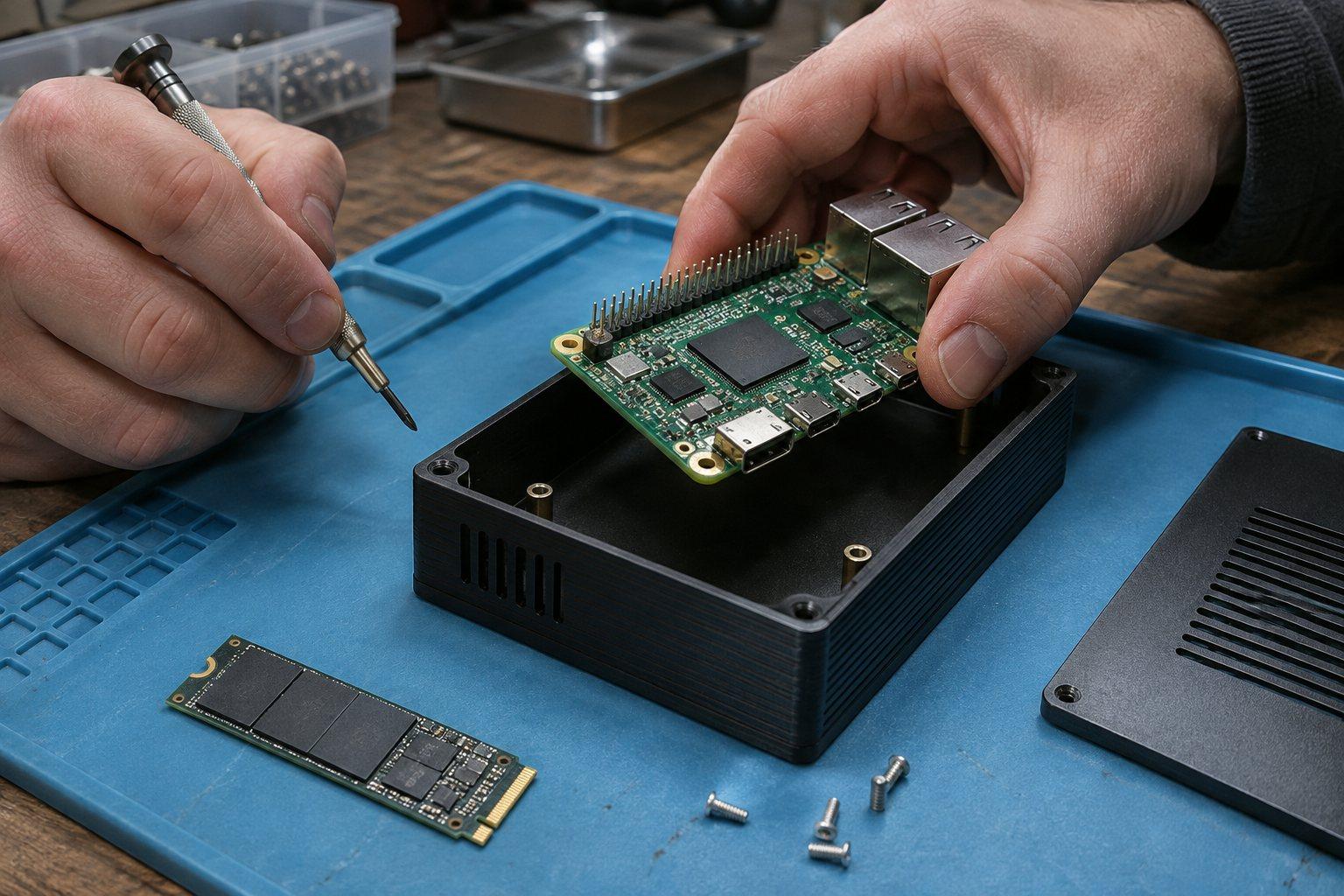
Build your own offline Wikipedia and maps hotspot on a Raspberry Pi
The whole build in plain steps: the parts, the downloads, the Wi-Fi hotspot and the offline map, with the exact commands and seven things that broke when we built ours.
November 14, 2026 · 6 min read

Offline Wikipedia
How big is Wikipedia offline? The real file sizes in 2026
English Wikipedia is 49.1 GB as text and 119 GB with images. Spanish is 12.4 GB as text. Here is every size we measured, how long the download takes and how to check the file.
November 14, 2026 · 4 min read